Monday, July 19, 2021

Those Baby Cows - Veal Recipes from Virginian Mary Randolph 1762-1828

The Virginia Housewife: or, Methodical Cook
By Mary Randolph 1762-1828
Baltimore: Plaskitt, Fite, 1838
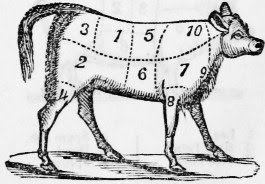

VEAL.

DIRECTIONS FOR THE PIECES IN THE DIFFERENT QUARTERS OF VEAL.
A LOIN of veal must always be roasted: the fillet or leg may be dressed in various ways, the knuckle or knee is proper for soup or for boiling; these are the pieces that compose the hind quarter. In the fore quarter, the breast and rack admit variety in cooking; the shoulder and neck are only fit for soup.

VEAL CUTLETS FROM THE FILLET OR LEG.
CUT off the flank and take the bone out, then take slices of the size of the fillet and half an inch thick, beat two yelks of eggs light, and have some grated bread mixed with pepper,salt, pounded nutmeg and chopped parsley; beat the slices a little, lay them on a board and wash the upper side with the egg, cover it thick with bread crumbs,press them on with a knife, and let them stand to dry a little, that they may not fall off in frying, then turn them gently, put egg and crumbs on in the same manner, put them into a pan of boiling lard, and fry them a light brown; have some good gravy ready, season it with a tea-spoonful of curry powder, a large one of wine, and one of lemon pickle, thicken with butter and brown flour, drain every drop of lard from the cutlets, lay them in the gravy, and stew them fifteen or twenty minutes; serve them up garnished with lemon cut in thin slices.

VEAL CHOPS.
TAKE the best end of a rack of veal, cut it in chops, with one bone in each, leave the small end of the bone bare two inches, beat them flat, and prepare them with eggs and crumbs, as the cutlets, butter some half-sheets of white paper, wrap one round each chop, skewer it well, leaving the bare bone out, broil them till done, and take care the paper does not burn; have nice white sauce in a boat.

VEAL CUTLETS.
CUT them from the fillet, put them in a stew pan with a piece of nice pork, a clove of garlic, a bundle of thyme and parsley,pepper and salt, cover them with water and let them stew ten or fifteen minutes, lay them on a dish, and when cold cover them well with the crumb of stale bread finely grated, mixed with the leaves of parsley chopped very small, some pepper,salt and grated nutmeg;press these on the veal with a knife, and when a little dried, turn it and do the same to the other side; put a good quantity of lard in a pan, when it boils lay the cutlets in carefully that the crumbs may not fall; fry them a little brown, lay them on a strainer to drain off the grease, do the same with the crumbs that have fallen in the pan: while this is doing, simmer the water they were boiled in to half a pint, strain it and thicken with four ounces of butter and a little browned flour; add a gill of wine and one of mushroom catsup, put in the cutlets and crumbs, and stew till tender; add forcemeat balls.

KNUCKLE OF VEAL.
BOIL a half pint of pearl barley in salt and water till quite tender, drain the water from it and stir in a piece of butter, put it in a deep dish; have the knuckle nicely boiled in milk and water, and lay it on the barley, pour some parsley and butter over it.

BAKED FILLET OF VEAL.
TAKE the bone out of the fillet, wrap the flap around and sew it, make a forcemeat of bread crumbs, the fat of bacon, a little onion chopped, parsley,pepper,salt, and a nutmeg pounded, wet it with the yelks of eggs, fill the place from which the bone was taken, make holes around it with a knife and fill them also, and lard the top; put it in a Dutch oven with a pint of water, bake it sufficiently, thicken the gravy with butter and brown flour, add a gill of wine and one of mushroom catsup, and serve it garnished with forcemeat balls fried.

SCOTCH COLLOPS OF VEAL.
THEY may be made of the nice part of the rack, or cut from the fillet, rub a little salt and pepper on them, and fry them a light brown; have a rich gravy seasoned with wine, and any kind of catsup you choose, with a few cloves of garlic, and some pounded mace, thicken it, put the collops in and stew them a short time, take them out, strain the gravy over, and garnish with bunches of parsley fried crisp, and thin slices of middling of bacon, curled around a skewer and boiled.

VEAL OLIVES.
TAKE the bone out of the fillet and cut thin slices the size of the leg, beat them flat, rub them with the yelk of an egg beaten, lay on each piece a thin slice of boiled ham, sprinkle salt,pepper, grated nutmeg, chopped parsley, and bread crumbs over all, roll them up tight, and secure them with skewers, rub them with egg and roll them in bread crumbs, lay them on a tin dripping pan, and set them in an oven; when brown on one side, turn them, and when sufficiently done, lay them in a rich highly seasoned gravy made of proper thickness, stew them till tender, garnish with forcemeat balls and green pickles sliced.

RAGOUT OF A BREAST OF VEAL.
SEPARATE the joints of the brisket, and saw off the sharp ends of the ribs, trim it neatly, and half roast it; put it in a stew pan with a quart of good gravy seasoned with wine,walnut and mushroom catsup, a tea-spoonful of curry powder, and a few cloves of garlic; stew it till tender, thicken the gravy, and garnish with sweetbreads nicely broiled.

FRICANDO OF VEAL.
CUT slices from the fillet an inch thick and six inches long, lard them with slips of lean middling of bacon, bake them a light brown, stew them in well seasoned gravy, made as thick as rich cream, serve them up hot, and lay round the dish sorrel stewed with butter,pepper and salt, till quite dry.

TO MAKE A PIE OF SWEETBREADS AND OYSTERS.
BOIL the sweetbreads tender, stew the oysters, season them with pepper and salt, and thicken with cream,butter, the yelks of eggs and flour, put a puff paste at the bottom and around the sides of a deep dish, take the oysters up with an egg spoon, lay them in the bottom, and cover them with the sweetbreads, fill the dish with gravy, put a paste on the top, and bake it. This is the most delicate pie that can be made. The sweetbread of veal is the most delicious part, and may be broiled, fried, or dressed in any way, and is always good.

MOCK TURTLE OF CALF'S HEAD.
HAVE the head nicely cleaned, divide the chop from the skull, take out the brains and tongue, and boil the other parts till tender, take them out of the water and put into a knuckle of veal or four pounds of lean beef, three onions chopped, thyme,parsley, a teaspoonful of pounded cloves, the same of mace,salt, and cayenne pepper to your taste--boil these things together till reduced to a pint, strain it, and add two gills of red wine, one of mushroom and one of walnut catsup, thicken it with butter and brown flour; the head must be cut in small pieces and stewed a few minutes in the gravy; put a paste round the edge of a deep dish, three folds, one on the other, but none on the bottom; pour in the meat and gravy, and bake it till the paste is done; pick all strings from the brains, pound them, and add grated bread,pepper and salt, make them in little cakes with the yelks of an egg, fry them a nice brown, boil six eggs hard, leave one whole and divide the others exactly in two, have some bits of paste nicely baked; when the head is taken from the oven, lay the whole egg in the middle, and dispose the others, with the brain cakes and bits of paste tastily around it. If it be wanted as soup, do not reduce the gravy so much, and after stewing the head, serve it in a tureen with the brain cakes and forcemeat balls fried, in place of the eggs and paste. The tongue should be salted and put in brine; they are very delicate, and four of them boiled and pealed, and served with four small chickens boiled, make a handsome dish, either cold or hot, with parsley and butter poured over them.

TO GRILL A CALF'S HEAD.
CLEAN and divide it as for the turtle, take out the brains and tongue, boil it tender, take the eyes out whole, and cut the flesh from the skull in small pieces; take some of the water it was boiled in for gravy, put to it salt,cayenne pepper, a grated nutmeg, with a spoonful of lemon pickle; stew it till it is well flavoured, take the jowl or chop, take out the bones, and cover it with bread crumbs, chopped parsley,pepper and salt, set it in an oven to brown, thicken the gravy with the yelks of two eggs and a spoonful of butter rubbed into two of flour, stew the head in it a few minutes, put it in the dish, and lay the grilled chop on it; garnish it with brain cakes and broiled sweetbreads.

TO COLLAR A CALF'S HEAD.
AFTER cleaning it nicely, saw the bone down the middle of the skull, but do not separate the head, take out the brains and tongue, boil it tender enough to remove the bones, which must be taken entirely out; lay it on a board, have a good quantity of chopped parsley seasoned with mace,nutmeg,pepper and salt--spread a layer of this, then one of thick slices of ham, another of parsley and one of ham, roll it up tight, sew a cloth over it, and bind that round with tape; boil it half an hour, and when cold press it. It must be kept covered with vinegar and water, and is very delicious eaten with sallad or oil and vinegar.

CALF'S HEART, A NICE DISH.
TAKE the heart and liver from the harslet, and cut off the windpipe, boil the lights very tender, and cut them in small pieces--take as much of the water they were boiled in as will be sufficient for gravy; add to it a large spoonful of white wine, one of lemon pickle, some grated nutmeg,pepper and salt, with a large spoonful of butter, mixed with one of white flour; let it boil a few minutes, and put in the minced lights, set it by till the heart and liver are ready, cut the ventricle out of the heart, wash it well, lard it all over with narrow slips of middling, fill the cavity with good forcemeat, put it in a pan on the broad end, that the stuffing may not come out; bake it a nice brown, slice the liver an inch thick and broil it, make the mince hot, set the heart upright in the middle of the dish, pour it around, lay the broiled liver on, and garnish with bunches of fried parsley; it should be served up extremely hot.

CALF'S FEET FRICASSEE.
BOIL the feet till very tender, cut them in two and pull out the large bones, have half a pint of good white gravy, add to it a spoonful of white wine, one of lemon pickle, and some salt, with a tea-spoonful of curry powder, stew the feet in it fifteen minutes, and thicken it with the yelks of two eggs, a gill of milk, a large spoonful of butter, and two of white flour, let the thickening be very smooth, shake the stew pan over the fire a few minutes, but do not let it boil lest the eggs and milk should curdle.

TO FRY CALF'S FEET.
PREPARE them as for the fricassee, dredge them well with flour and fry them a light brown, pour parsley and butter over, and garnish with fried parsley.

TO PREPARE RENNET.
TAKE the stomach from the calf as soon as it is killed--do not wash it, but hang it in a dry cool place for four or five days; then turn it inside out, slip off all the curd nicely with the hand, fill it with a little saltpetre mixed with the quantity of salt necessary, and lay it in a small stone pot, pour over it a small teaspoonful of vinegar, and sprinkle a handful of salt over it, cover it closely and keep it for use. You must not wash it--that would weaken the gastric juice, and injure the rennet. After it has been salted six or eight weeks, cut off a piece four or five inches long, put it in a large mustard bottle, or any vessel that will hold about a pint and a half; put on it five gills of cold water, and two gills of rose brandy--stop it very close, and shake it when you are going to use it: a table-spoonful of this is sufficient for a quart of milk. It must be prepared in very cool weather, and if well done, will keep more than a year.

TO HASH A CALF'S HEAD.
BOIL the head till the meat is almost enough for eating; then cut it in thin slices, take three quarters of a pint of good gravy, and add half a pint of white wine, half a nutmeg, two anchovies, a small onion stuck with cloves, and a little mace; boil these up in the liquor for a quarter of an hour, then strain it and boil it up again; put in the meat, with salt to your taste, let it stew a little, and if you choose it, you may add some sweetbreads, and make some forcemeat balls with veal; mix the brains with the yelks of eggs and fry them to lay for a garnish. When the head is ready to be sent in, stir in a bit of butter.

TO BAKE A CALF'S HEAD.
DIVIDE the calf's head, wash it clean, and having the yelks of two eggs well beaten, wash the outside of the head all over with them, and on that strew raspings of bread sifted, pepper,salt,nutmeg and mace powdered; also, the brains cut in pieces and dipped in thick butter, then cover the head with bits of butter, pour into the pan some white wine and water, with as much gravy, and cover it close. Let it be baked in a quick oven, and when it is served up, pour on some strong gravy, and garnish with slices of lemon,red beet root pickled, fried oysters and fried bread.

TO STUFF AND ROAST A CALF'S LIVER.
TAKE a fresh calf's liver, and having made a hole in it with a large knife run in lengthways, but not quite through, have ready a forced meat, or stuffing made of part of the liver parboiled, fat of bacon minced very fine, and sweet herbs powdered; add to these some grated bread and spice finely powdered, with pepper and salt. With this stuffing fill the hole in the liver, which must be larded with fat bacon, and then roasted, flouring it well, and basting with butter till it is enough. This is to be served up hot, with gravy sauce having a little wine in it.

TO BROIL CALF'S LIVER.
CUT it in slices, put over it salt and pepper; broil it nicely, and pour on some melted butter with chopped parsley after it is dished.

Directions for cleaning Calf's Head and Feet, for those who live in the country and butcher their own meats. ..
As soon as the animal is killed, have the head and feet taken off, wash them clean, sprinkle some pounded rosin all over the hairs, then dip them in boiling water, take them instantly out, the rosin will dry immediately, and they may be scraped clean with case; the feet should be soaked in water three or four days, changing it daily; this will make them very white.


Saturday, July 17, 2021

Pigs from the Farm - Pork Recipes from Virginian Mary Randolph 1762-1828

The Virginia Housewife: or, Methodical Cook
By Mary Randolph 1762-1828
Baltimore: Plaskitt, Fite, 1838
PORK Recipes.

TO CURE BACON.
HOGS are in the highest perfection, from two and a half to four years old, and make the best bacon, when they do not weigh more than one hundred and fifty or sixty at farthest; they should be fed with corn, six weeks at least, before they are killed, and the shorter distance they are driven to market, the better will their flesh be. To secure them against the possibility of spoiling, salt them before they get cold; take out the chine or back-bone from the neck to the tail, cut the hams, shoulders and middlings; take the ribs from the shoulders and the leaf fat from the hams: have such tubs as are directed for beef, rub a large table spoonful of saltpetre on the inside of each ham, for some minutes, then rub both sides well with salt, sprinkle the bottom of the tub with salt, lay the hams with the skin downward, and put a good deal of salt between each layer; salt the shoulders and middlings in the same manner, but less saltpetre is necessary; cut the jowl or chop from the head, and rub it with salt and saltpetre. You should cut off the feet just above the knee joint; take off the ears and nose, and lay them in a large tub of cold water for souse. When the jowls have been in salt two weeks, hang them up to smoke--do so with the shoulders and middlings at the end of three weeks, and the hams at the end of four. If they remain longer in salt they will be hard. Remember to hang the hams and shoulders with the hocks down, to preserve the juices. Make a good smoke every morning, and be careful not to have a blaze; the smoke-house should stand alone, for any additional heat will spoil the meat. During the hot weather, beginning the first of April, it should be occasionally taken down, examined--rubbed with hickory ashes, and hung up again.

The generally received opinion that saltpetre hardens meat, is entirely erroneous:--it tends greatly to prevent putrefaction, but will not make it hard; neither will laying in brine five or six weeks in cold weather, have that effect, but remaining in salt too long, will certainly draw off the juices, and harden it. Bacon should be boiled in a large quantity of water, and a ham is not done sufficiently, till the bone on the under part comes off with case. New bacon requires much longer boiling than that which is old.

TO MAKE SOUSE.
LET all the pieces you intend to souse, remain covered with cold water twelve hours; then wash them out, wipe off the blood, and put them again in fresh water; soak them in this manner, changing the water frequently, and keeping it in a cool place, till the blood is drawn away; scrape and clean each piece perfectly nice, mix some meal with water, add salt to it, and boil your souse gently, until you can run a straw into the skin with ease. Do not put too much in the pot, for it will boil to pieces and spoil the appearance. The best way is to boil the feet in one pot, the ears and nose in another, and the heads in a third; these should be boiled till you can take all the bones out; let them get cold, season the insides with pepper, salt, and a little nutmeg; make it in a tight roll, sew it up close in a cloth, and press it lightly. Mix some more meal and cold water; just enough to look white; add salt, and one-fourth of vinegar; put your souse in different pots, and keep it well covered with this mixture, and closely stopped. It will be necessary to renew this liquor every two or three weeks. Let your souse get quite cold after boiling, before you put it in the liquor, and be sure to use pale coloured vinegar, or the souse will be dark. Some cooks singe the hair from the feet, etcetera, but this destroys the colour: good souse will always be white.

TO ROAST A PIG.
THE pig must be very fat, nicely cleaned, and not too large to lie in the dish; chop the liver fine and mix it with crumbs of bread, chopped onion and parsley, with pepper and salt, make it into a paste with butter and an egg, stuff the body well with it, and sew it up, spit it, and have a clear fire to roast it; baste with salt and water at first, then rub it frequently with a lump of lard wrapped in a piece of clean linen; this will make it much more crisp than basting it from the dripping pan. When the pig is done, take off the head, separate the face from the chop, cut both in two and take off the ears, take out the stuffing, split the pig in two parts lengthways, lay it in the dish with the head, ears, and feet, which have been cut off, placed on each side, put the stuffing in a bowl with a glass of wine, and as much dripping as will make it sufficiently liquid, put some of it under the pig, and serve the rest in a boat.

TO BARBECUE SHOTE.
This is the name given in the southern states to a fat young hog, which, when the head and feet are taken off, and it is cut into four quarters, will weigh six pounds per quarter. Take a fore-quarter, make several incisions between the ribs, and stuff it with rich forcemeat; put it in a pan with a pint of water, two cloves of garlic, pepper, salt, two gills of red wine, and two of mushroom catsup, bake it, and thicken the gravy with butter and brown flour; it must be jointed, and the ribs cut across before it is cooked, or it cannot be carved well; lay it in the dish with the ribs uppermost; if it be not sufficiently brown, add a little burnt sugar to the gravy, garnish with balls.

TO ROAST A FORE-QUARTER OF SHOTE.
JOINT it for the convenience of carving, roast it before a brisk fire; when done, take the skin off, dredge and froth it, put a little melted butter with some caper vinegar over it, or serve it with mint sauce.

TO MAKE SHOTE CUTLETS.
TAKE the skin from the hind-quarter, and cut it in pieces, prepare them in the way directed for veal cutlets, make a little nice gravy with the skin and the scraps of meat left, thicken it with butter and brown flour, and season it in any way you like.

TO CORN SHOTE.
RUB a hind-quarter with saltpetre and common salt, let it lie ten days, then boil it, and put either carrots or parsnips under it.

SHOTE'S HEAD.
TAKE out the brains, and boil the head till quite tender, cut the heart and liver from the harslet, and boil the feet with the head; cut all the meat from the head in small pieces, mince the tongue and chop the brains small, take some of the water the head was boiled in, season it with onion, parsley and thyme, all chopped fine, add any kind of catsup--thicken it with butter and brown flour, stew the whole in it fifteen minutes, and put it in the dish: have the heart roasted to put in the middle, lay the broiled liver around, and garnish it with green pickle.

LEG OF PORK WITH PEASE PUDDING.
BOIL a small leg of pork that has been sufficiently salted, score the top and serve it up; the pudding must be in a separate dish; get small delicate pease, wash them well, and tie them in a cloth, allowing a little room for swelling, boil them with the pork, then mash and season them, tie them up again and finish boiling it; take care not to break the pudding in turning it out.

STEWED CHINE.
TAKE the neck chine, rub it well with salt, lay it in a pan, put it in a pint of water, and fill it up with sweet potatos nicely washed, but not peeled, cover it close and bake it till done; serve it up with the potatos, put a little of the gravy in the dish.

TO TOAST A HAM.
BOIL it well, take off the skin, and cover the top thickly with bread crumbs, put it in an oven to brown, and serve it up.

TO STUFF A HAM.
TAKE a well smoked ham, wash it very clean, make incisions all over the top two inches deep, stuff them quite full with parsley chopped small and some pepper, boil the ham sufficiently; do not take off the skin. It must be eaten cold.

SOUSED FEET IN RAGOUT.
SPLIT the feet in two, dredge them with flour and fry them a nice brown; have some well seasoned gravy thickened with brown flour and butter; stew the feet in it a few minutes.

TO MAKE SAUSAGES.
TAKE the tender pieces of fresh pork, chop them exceedingly fine--chop some of the leaf fat, and put them together in the proportion of three pounds of pork to one of fat, season it very high with pepper and salt, add a small quantity of dried sage rubbed to a powder, have the skins nicely prepared, fill them and hang them in a dry place. Sausages are excellent made into cakes and fried, but will not keep so well as in skins.

TO MAKE BLACK PUDDINGS.
CATCH the blood as it runs from the hog, stir it continually till cold to prevent its coagulating; when cold thicken it with boiled rice or oatmeal, add leaf fat chopped small, pepper, salt, and any herbs that are liked, fill the skins and smoke them two or three days; they must be boiled before they are hung up, and prick them with a fork to keep them from bursting.

A SEA PIE.
LAY at the bottom of a small Dutch oven some slices of boiled pork or salt beef, then potatos and onions cut in slices, salt, pepper, thyme and parsley shred fine, some crackers soaked, and a layer of fowls cut up, or slices of veal; cover them with a paste not too rich, put another layer of each article, and cover them with paste until the oven is full; put a little butter between each layer, pour in water till it reaches the top crust, to which you must add wine, catsup of any kind you please, and some pounded cloves; let it stew until there is just gravy enough left; serve it in a deep dish and pour the gravy on.

TO MAKE PASTE FOR THE PIE.
POUR half a pound of butter or dripping, boiling hot, into a quart of flour, add as much water as will make it a paste, work it and roll it well before you use it. It is quite a savoury paste.

BOLOGNA SAUSAGES.
TAKE one pound of bacon--fat and lean, one ditto veal, do.,pork, do., suet, chop all fine, season highly: fill the skins, prick and boil them an hour, and hang them to dry--grated bread or boiled rice may be added: clean the skins with salt and vinegar.

Thursday, July 15, 2021

From the Gardens & Fields - Vegetable Recipes from Virginian Mary Randolph 1762-1828

The Virginia Housewife: or, Methodical Cook
By Mary Randolph 1762-1828
Baltimore: Plaskitt, Fite, 1838


VEGETABLES.

TO DRESS SALAD.
To have this delicate dish in perfection, the lettuce,pepper grass,chervil,cress, &c. should be gathered early in the morning, nicely picked, washed, and laid in cold water, which will be improved by adding ice; just before dinner is ready to be served, drain the water from your salad, cut it into a bowl, giving the proper proportions of each plant; prepare the following mixture to pour over it: boil two fresh eggs ten minutes, put them in water to cool, then take the yelks in a soup plate, pour on them a table spoonful of cold water, rub them with a wooden spoon until they are perfectly dissolved; then add two spoonsful of oil: when well mixed, put in a teaspoonful of salt, one of powdered sugar, and one of made mustard; when all these are united and quite smooth, stir in two table spoonsful of common, and two of tarragon vinegar; put it over the salad, and garnish the top with the whites of the eggs cut into rings, and lay around the edge of the bowl young scallions, they being the most delicate of the onion tribe.

TO BOIL POTATOS.
WASH them, but do not pare or cut them, unless they are very large; fill a sauce-pan half full of potatos of equal size, (or make them so by dividing the large ones,) put to them as much cold water as will cover them about an inch; they are sooner boiled, and more savoury, than when drowned in water; most boiled things are spoiled by having too little water, but potatos are often spoiled by having too much; they must merely be covered, and a little allowed for waste in boiling, so that they must be just covered when done. Set them on a moderate fire till they boil, then take them off, and set them by the fire to simmer slowly, till they are soft enough to admit a fork; (place no dependence on the usual test of their skin's cracking, which, if they are boiled fast, will happen to some potatos when they are not half done, and the inside is quite hard,) then pour off the water, (if you let the potatos remain in the water a moment after they are done enough, they will become waxy and watery,) uncover the sauce-pan, and set it at such a distance from the fire as will secure it from burning; their superfluous moisture will evaporate, and the potatos will be perfectly dry and mealy. You may afterwards place a napkin, folded up to the size of the sauce-pan's diameter, over the potatos, to keep them dry and mealy till wanted, this method of managing potatos, is, in every respect, equal to steaming them, and they are dressed in half the time.

TO FRY SLICED POTATOS.
PEEL large potatos,slice them about a quarter of an inch thick, or cut them in shavings round and round, as you would peel a lemon; dry them well in a clean cloth, and fry them in lard or dripping. Take care that your fat and frying-pan are quite clean; put it on a quick fire, watch it, and as soon as the lard boils and is still, put in the slices of potatos, and keep moving them till they are crisp; take them up, and lay them to drain on a sieve; send them up with very little salt sprinkled on them.

POTATOS MASHED.
WHEN the potatos are thoroughly boiled, drain and dry them perfectly, pick out every speck, and rub them through a colander into a clean stew-pan; to a pound of potatos put half an ounce of butter, and a tablespoonful of milk; do not make them too moist; mix them well together. When the potatos are getting old and specked, and in frosty weather, this is the best way of dressing them--you may put them into shapes, touch them over with yelk of egg, and brown them very slightly before a slow fire.

POTATOS MASHED WITH ONIONS.
PREPARE some onions by putting them through a sieve,and mix them with potatos; in proportioning the onions to the potatos, you will be guided by your wish to have more or less of their flavour.

TO ROAST POTATOS.
WASH and dry your potatos, (all of a size,) and put them in a tin Dutch oven, or cheese toaster; take care not to put them too near the fire, or they will get burned on the outside before they are warmed through. Large potatos will require two hours to roast them. To save time and trouble, some cooks half boil them first.

TO ROAST POTATOS UNDER MEAT.
HALF boil large potatos, drain the water from them, and put them into an earthen dish or small tin pan, under meat that is roasting, and baste them with some of the dripping; when they are browned on one side, turn them and brown the other; send them up around the meat, or in a small dish.

POTATO BALLS.
MIX mashed potatos with the yelk of an egg, roll them into balls, flour them, or cover them with egg and bread crumbs, fry them in clean dripping, or brown them in a Dutch oven. They are an agreeable vegetable relish, and a supper dish.

JERUSALEM ARTICHOKES,
ARE boiled and dressed in the various ways we have just before directed for potatos. They should be covered with thick melted butter, or a nice white or brown sauce.

CABBAGE.
PICK cabbages very clean, and wash them thoroughly; then look them carefully over again; quarter them if they are very large; put them into a sauce pan with plenty of boiling water; if any skum rises, take it off, put a large spoonful of salt into the sauce pan, and boil them till the stalks feel tender. A young cabbage will take about twenty minutes, or half an hour; when full grown, nearly an hour; see that they are well covered with water all the time, and that no dirt or smoke arises from stirring the fire. With careful management, they will look as beautiful when dressed as they did when growing. It will much ameliorate the flavour of strong old cabbages, to boil them in two waters, i.e. when they are half done, to take them out, and put them into another sauce pan of boiling water.

SAVOYS,
ARE boiled in the same manner; quarter them when you send them to table.

SPROUTS AND YOUNG GREENS
THE receipt written for cabbages will answer as well for sprouts, only they will be boiled enough in fifteen minutes.

ASPARAGUS.
SET a stew-pan with plenty of water on the fire, sprinkle a handful of salt in it, let it boil, and skim it; then put in the asparagus prepared thus: scrape all the stalks till they are perfectly clean; throw them into a pan of cold water as you scrape them; when they are all done, tie them in little bundles, of a quarter of a hundred each, with bass, if you can get it, or tape; cut off the stalks at the bottom, that they may be all of a length; when they are tender at the stalk, which will be in from twenty to thirty minutes, they are done enough. Great care must be taken to watch the exact time of their becoming tender; take them just at that instant, and they will have their true flavour and colour; a minute or two more boiling destroys both. While the asparagus is boiling, toast a slice of a loaf of bread, about a half an inch thick; brown it delicately on both sides; dip it lightly in the liquor the asparagus was boiled in, and lay it in the middle of a dish; pour some melted butter on the toast, and lay the asparagus upon it; let it project beyond the asparagus, that the company may see there is a toast. Do not pour butter over them, but send some in a boat.

SEA-KALE,
Is tied up in bundles, and dressed in the same way as asparagus.

TO SCOLLOP TOMATOS.
PEEL off the skin from large, full, ripe tomatos--put a layer in the bottom of a deep dish, cover it well with bread grated fine; sprinkle on pepper and salt, and lay some bits of butter over them--put another layer of each, till the dish is full--let the top be covered with crumbs and butter--bake it a nice brown.

TO STEW TOMATOS.
TAKE off the skin, and put them in a pan with salt,pepper, and a large piece of butter--stew them till sufficiently dry.

CAULIFLOWER.
CHOOSE those that are close and white, and of a middle size--trim off the outside leaves, cut off the stalk flat at the bottom, let them lie in salt and water an hour before you boil them. Put them in boiling water, with a handful of salt in it--skim it well, and let it boil slowly till done, which a small one will be in fifteen minutes, a large one in twenty--and take it up the moment it is enough: a few minutes longer boiling will spoil it.

RED BEET ROOTS,
ARE not so much used as they deserve to be; they are dressed in the same way as parsnips, only neither scraped nor cut till after they are boiled; they will take from an hour and a half to three hours in boiling, according to their size; to be sent to the table with salt fish, boiled beef, &c. When young, small and juicy, it is a very good variety, an excellent garnish, and easily converted into a very cheap and pleasant pickle.

PARSNIPS,
ARE to be cooked just in the same manner as carrots; they require more or less time, according to their size; therefore match them in size, and you must try them by thrusting a fork into them as they are in the water; when this goes easily through, they are done enough: boil them from an hour to two hours, according to their size and freshness. Parsnips are sometimes sent up mashed in the same way as turnips.

CARROTS.
LET them be weil washed and scraped--an hour is enough for young spring carrots; grown carrots will take from an hour and a half to two hours and a half. The best way to try if they are done enough, is to pierce them with a fork.

FIELD PEAS.
THERE are many varieties of these peas; the smaller kind are the most delicate. Have them young and newly gathered, shell and boil them tender; pour them in a colander to drain; put some lard in a frying pan; when it boils, mash the peas, and fry them in a cake of a light brown; put it in the dish with the crust uppermost--garnish with thin bits of fried bacon. They are very nice when fried whole, so that each pea is distinct from the other; but they must be boiled less, and fried with great care. Plain boiling is a very common way of dressing them.

TURNIPS.
PEEL off half an inch of the stringy outside--full grown turnips will take about an hour and a half gentle boiling; try them with a fork, and when tender, take them up, and lay them on a sieve till the water is thoroughly drained from them; send them up whole; to very young turnips, leave about two inches of green top; the old ones are better when the water is changed as directed for cabbage.

TO MASH TURNIPS.
WHEN they are boiled quite tender, squeeze them as dry as possible--put them into a sauce pan, mash them with a wooden spoon, and rub them through a colander; add a little bit of butter, keep stirring them till the butter is melted and well mixed with them, and they are ready for table.

TURNIP TOPS,
ARE the shoots which grow out, (in the spring,) from the old turnip roots. Put them in cold water an hour before they are dressed; the more water they are boiled in, the better they will look; if boiled in a small quantity of water, they will taste bitter; when the water boils, put in a small handful of salt, and then your vegetables; they are still better boiled with bacon in the Virginia style: if fresh and young, they will be done in about twenty minutes--drain them on the back of a sieve, and put them under the bacon.

FRENCH BEANS.
CUT off the stalk end first, and then turn to the point and strip off the strings; if not quite fresh, have a bowl of spring water, with a little salt dissolved in it, standing before you; as the beans are cleansed and trimmed, throw them in; when all are done, put them on the fire in boiling water, with some salt in it; when they have boiled fifteen or twenty minutes, take one out and taste it; as soon as they are tender, take them up, and throw them into a colander to drain. To send up the beans whole, when they are young, is much the best method, and their delicate flavour and colour is much better preserved. When a little more grown, they must be cut lengthwise in thin slices after stringing; and for common tables, they are split, and divided across; but those who are nice, do not use them at such a growth as to require splitting.

ARTICHOKES.
SOAK them in cold water, wash them well, then put them into plenty of boiling water, with a handful of salt, and let them boil gently till they are tender, which will take an hour and a half, or two hours; the surest way to know when they are done enough, is to draw out a leaf; trim them, and drain them on a sieve, and send up melted butter with them, with some put into small cups, so that each guest may have one.

BROCOLI.
THE kind which bears flowers around the joints of the stalks, must be cut into convenient lengths for the dish; scrape the skin from the stalk, and pick out any leaves or flowers that require to be removed; tie it up in bunches, and boil it as asparagus; serve it up hot, with melted butter poured over it. The brocoli that heads at the top like cauliflowers, must be dressed in the same manner as the cauliflower.

PEAS.
To have them in perfection, they must be quite young, gathered early in the morning, kept in a cool place, and not shelled until they are to be dressed; put salt in the water, and when it boils, put in the peas; boil them quick twenty or thirty minutes, according to their age; just before they are taken up, add a little mint chopped very fine; drain all the water from the peas, put in a bit of butter, and serve them up quite hot.

PUREE OF TURNIPS.
PARE a dozen large turnips,slice them, and put them into a stew-pan, with four ounces of butter and a little salt; set the pan over a moderate fire, turn them often with a wooden spoon; when they look white, add a ladle full of veal gravy, stew them till it becomes thick; skim it, and pass it through a sieve; put the turnips in a dish, and pour the gravy over them.

RAGOUT OF TURNIPS.
PEEL as many small turnips as will fill a dish; put them into a stew pan with some butter and a little sugar, set them over a hot stove, shake them about, and turn them till they are a good brown; pour in half a pint of rich high seasoned gravy; stew the turnips till tender, and serve them with the gravy poured over them.

RAGOUT OF FRENCH BEANS, SNAPS, STRING BEANS.
LET them be young and fresh gathered, string them, and cut them in long thin slices; throw them in boiling water for fifteen minutes; have ready some well seasoned brown gravy, drain the water from the beans, put them in the gravy, stew them a few minutes, and serve them garnished with forcemeat balls; there must not be gravy enough to float the beans.

MAZAGAN BEANS.
THIS is the smallest and most delicate species of the Windsor bean. Gather them in the morning, when they are full grown, but quite young, and do not shell them till you are going to dress them. Put them into boiling water, have a small bit of middling, (flitch,) of bacon, well boiled--take the skin off, cover it with bread crumbs, and toast it; lay this in the middle of the dish, drain all the water from the beans--put a little butter with them, and pour them round the bacon. When the large Windsor beans are used, it is best to put them into boiling water until the skins will slip off, and then make them into a puree as directed for turnips--they are very coarse when plainly dressed.

LIMA, OR SUGAR BEANS.
LIKE all other spring and summer vegetables, they must be young and freshly gathered: boil them till tender, drain them, add a little butter, and serve them up. These beans are easily preserved for winter use, and will be nearly as good as fresh ones. Gather them on a dry day, when full grown, but quite young: have a clean and dry keg, sprinkle some salt in the bottom, put in a layer of pods, containing the beans, then a little salt--do this till the keg is full; lay a board on with a weight, to press them down; cover the keg very close, and keep it in a dry, cool place--they should be put up as late in the season, as they can be with convenience. When used, the pods must be washed, and laid in fresh water all night; shell them next day, and keep them in water till you are going to boil them; when tender, serve them up with melted butter in a boat. French beans (snaps) may be preserved in the same manner.

TURNIP ROOTED CABBAGE.
THE cabbage growing at the top is not good; cut the root in slices an inch thick, peel off the rind, and boil the slices in a large quantity of water, till tender, serve it up hot, with melted butter poured over it.

EGG PLANT.
THE purple ones are best; get them young and fresh; pull out the stem, and parboil them to take off the bitter taste; cut them in slices an inch thick, but do not peel them; dip them in the yelk of an egg, and cover them with grated bread, a little salt and pepper--when this has dried, cover the other side the same way--fry them a nice brown. They are very delicious, tasting much like soft crabs. The egg plant may be dressed in another manner: scrape the rind and parboil them; cut a slit from one end to the other, take out the seeds, fill the space with a rich forcemeat, and stew them in well seasoned gravy, or bake them, and serve up with gravy in the dish.

POTATO PUMPKIN.
GET one of a good colour, and seven or eight inches in diameter; cut a piece off the top, take out all the seeds, wash and wipe the cavity, pare the rind off, and fill the hollow with good forcemeat--put the top on, and set it in a deep pan, to protect the sides; bake it in a moderate oven, put it carefully in the dish without breaking, and it will look like a handsome mould. Another way of cooking potato pumpkin is to cut it in slices, pare off the rind, and make a puree as directed for turnips.

SWEET POTATO.
TAKE those that are nearly of the same size, that they may be done equally--wash them clean, but do boil them till tender, drain the water off, and put them on tin sheets in a stove for a few minutes to dry.

SWEET POTATOS STEWED.
WASH and wipe them, and if they be large, cut them in two lengths; put them at the bottom of a stew pan, lay over some slices of boiled ham; and on that, one or two chickens cut up with pepper,salt, and a bundle of herbs; pour in some water, and stew them till done, then take out the herbs, serve the stew in a deep dish--thicken the gravy, and pour over it.

SWEET POTATOS BROILED.
CUT them across without peeling, in slices half an inch thick, broil them on a griddle, and serve them with butter in a boat.

SPINACH.
GREAT care must be used in washing and picking it clean; drain it, and throw it into boiling water--a few minutes will boil it sufficiently: press out all the water, put it in a stew pan with a piece of butter, some pepper and salt--chop it continually with a spoon till it is quite dry: serve it with poached eggs or without, as you please.

SORREL,
Is dressed as the spinach; and if they be mixed in equal proportions, improve each other.

CABBAGE PUDDING.
GET a fine head of cabbage, not too large; pour boiling water on, and cover it till you can turn the leaves back, which you must do carefully; take some of those in the middle of the head off, chop them fine, and mix them with rich forcemeat; put this in, and replace the leaves to confine the stuffing--tie it in a cloth, and boil it--serve it up whole, with a little melted butter in the dish.

SQUASH OR CIMLIN.
GATHER young squashes, peel, and cut them in two; take out the seeds, and boil them till tender; put them into a colander, drain off the water, and rub them with a wooden spoon through the colander; then put them into a stew pan, with a cup full of cream, a small piece of butter, some pepper and salt--stew them, stirring very frequently until dry. This is the most delicate way of preparing squashes.

WINTER SQUASH.
THE crooked neck of this squash is the best part. Cut it in slices an inch thick, take off the rind, and boil them with salt in the water; drain them well before they are dished, and pour melted butter over--serve them up very hot. The large part, containing the seeds, must be sliced and pared--cut it in small pieces, and stew it till soft, with just water enough to cover it; pass it through a sieve, and stew it again, adding some butter,pepper, and salt; it must be dry, but not burnt. It is excellent when stewed with pork chops.

CABBAGE WITH ONIONS.
BOIL them separately, and mix them in the proportions you like; add butter,pepper, and salt, and either stew them, or fry them in a cake.

SALSIFY.
SCRAPE and wash the roots, put them into boiling water with salt; when done, drain them, and place them in the dish without cutting them up. They are a very excellent vegetable, but require nicety in cooking; exposure to the air, either in scraping, or after boiling, will make them black.

STEWED SALSIFY.
HALF boil it, cut it up, and put it in a stew pan, with a very little water, and a spoonful of butter; stew them dry, and serve them up. For change, you may, after stewing, cut them in scollop shells with grated bread, and bake them; or make them into cakes, and fry them. They are delicious in whatever way they can be dressed.

STEWED MUSHROOMS.
GATHER grown mushrooms, but such as are young enough to have red gills; cut off that part of the stem which grew in the earth--wash them carefully, and take the skin from the top; put them into a stew pan with some salt, but no water--stew them till tender, and thicken them with a spoonful of butter, mixed with one of brown flour;red wine may be added, but the flavour of the mushroom is too delicious to require aid from any thing.

BROILED MUSHROOMS.
PREPARE them as above directed--broil them on a griddle, and when done, sprinkle pepper and salt on the gills, and put a little butter on them.

TO BOIL RICE.
PUT two cups full of rice in a bowl of water, rub it well with the hand, and pour off the water; do this until the water ceases to be discoloured; then put the rice into two and a half cups of cold water; add a tea-spoonful of salt, cover the pot close, and set it on a brisk fire; let it boil ten minutes, pour off the greater part of the water, and remove the pot to a bed of coals, where it must remain a quarter of an hour to soak and dry.

RICE JOURNEY, OR JOHNNY CAKE.
BOIL a pint of rice quite soft, with a tea-spoonful of salt; mix with it while hot a large spoonful of butter, and spread it on a dish to cool; when perfectly cold, add a pint of rice flour and half a pint of milk--beat them all together till well mingled. Take the middle part of the head of a barrel, make it quite clean, wet it, and put on the mixture about an inch thick, smooth with a spoon, and baste it with a little milk; set the board aslant before clear coals; when sufficiently baked, slip a thread under the cake and turn it: baste and bake that side in a similar manner, split it, and butter while hot. Small homony boiled and mixed with rice flour, is better than all rice; and if baked very thin, and afterwards toasted and buttered, it is nearly as good as cassada bread.

Tuesday, July 13, 2021

Lamb & Mutton Recipes from Virginian Mary Randolph 1762-1828

The Virginia Housewife: or, Methodical Cook
By Mary Randolph 1762-1828
Baltimore: Plaskitt, Fite, 1838


TO ROAST THE FORE-QUARTER, &c.
THE fore-quarter should always be roasted and served with mint sauce in a boat; chop the mint small and mix it with vinegar enough to make it liquid, sweeten it with sugar.
The hind-quarter may be boiled or roasted, and requires mint sauce; it may also be dressed in various ways.

BAKED LAMB.
CUT the shank bone from a hind-quarter, separate the joints of the loin, lay it in a pan with the kidney uppermost, sprinkle some pepper and salt, add a few cloves of garlic, a pint of water and a dozen large ripe tomatos with the skins taken off, bake it but do not let it be burnt, thicken the gravy with a little butter and brown flour.

FRIED LAMB.
SEPARATE the leg from the loin, cut off the shank and boil the leg; divide the loin in chops, dredge and fry them a nice brown, lay the leg in the middle of the dish, and put the chops around, pour over parsley and butter, and garnish with fried parsley.
The leg cut into steaks and the loin into chops, will make a fine fricassee, or cutlets.

TO DRESS LAMB'S HEAD AND FEET.
CLEAN them very nicely, and boil them till tender, take off the flesh from the head with the eyes, also mince the tongue and heart, which must be boiled with the head; split the feet in two, put them with the pieces from the head and the mince, into a pint of good gravy, seasoned with pepper, salt, and tomato catsup, or ripe tomatos: stew it till tender, thicken the gravy, and lay the liver cut in slices and broiled over it--garnish with crisp parsley and bits of curled bacon.

MUTTON Recipes.

THE saddle should always be roasted and garnished with scraped horse-radish. See general observations on roasting. Mutton is in the highest perfection from August until Christmas, when it begins to decline in goodness.

BOILED LEG OF MUTTON.
CUT off the shank, wrap the flank nicely round and secure it with skewers, dredge it well with flour, and put it on the fire in a kettle of cold water with some salt, and three or four heads of garlic, which will give it a delicately fine flavour; skin it well, and when nearly done, take it from the fire and keep it hot and closely covered, that the steam may finish it; have carrots well boiled to put in the dish under it, or turnips boiled, mashed smooth and stewed with a lump of butter and salt, lay the mutton on, and pour over it butter melted with some flour in it, and a cup full of capers with some of the vinegar; shake them together over the fire till hot before you pour it on.

ROASTED LEG.
PREPARE it as for boiling, be very careful in spitting it, cover it with paper and follow the directions for roasting, serve it up garnished with scraped horse-radish.

BAKED LEG OF MUTTON.
TAKE the flank off, but leave all the fat, cut out the bone, stuff the place with a rich forcemeat, lard the top and sides with bacon, put it in a pan with a pint of water, some chopped onion and cellery cut small, a gill of red wine, one of mushroom catsup and a tea-spoonful of curry powder, bake it and serve it up with the gravy, garnish with forcemeat balls fried.

STEAKS OF A LEG OF MUTTON.
CUT off the flank, take out the bone, and cut it in large slices half an inch thick, sprinkle some salt and pepper, and broil it, pour over it nice melted butter with capers; a leg cut in the same way and dressed as directed for veal cutlets, is very fine. It is also excellent when salted as beef, and boiled, served up with carrots or turnips.
A shoulder of mutton is best when roasted, but may be made into cutlets or in a harrico.

TO HARRICO MUTTON.
TAKE the nicest part of the rack, divide it into chops, with one bone in each, beat them flat, sprinkle salt and pepper on them, and broil them nicely; make a rich gravy out of the inferior parts, season it well with pepper, a little spice, and any kind of catsup you
choose; when sufficiently done, strain it, and thicken it with butter and brown flour, have some carrots and turnips cut into small dice and boiled till tender, put them in the gravy, lay the chops in and stew them fifteen minutes; serve them up garnished with green pickle.

MUTTON CHOPS.
CUT the rack as for the harrico, broil them, and when dished, pour over them a gravy made with two large spoonsful of boiling water, one of mushroom catsup, a small spoonful of butter and some salt, stir it till the butter is melted, and garnish with horse-radish scraped.

BOILED BREAST OF MUTTON.
SEPARATE the joints of the brisket, and saw off the sharp ends of the ribs, dredge it with flour, and boil it; serve it up covered with onions--see onion sauce.

BREAST OF MUTTON IN RAGOUT.
PREPARE the breast as for boiling, brown it nicely in the oven, have a rich gravy well seasoned and thickened with brown flour, stew the mutton in it till sufficiently done, and garnish with forcemeat balls fried.

TO GRILL A BREAST OF MUTTON.
PREPARE it as before, score the top, wash it over with the yelk of an egg, sprinkle some salt, and cover it with bread crumbs, bake it, and pour caper sauce in the dish. It may also be roasted, the skin taken off and frothed nicely, serve it up with good gravy, and garnish with current jelly cut in slices.

The neck of mutton is fit only for soup, the liver is very good when broiled.

BOILED SHOULDER OF MUTTON.
PUT it in cold water with some salt, and boil it till tender; serve it up covered with onion sauce.

SHOULDER OF MUTTON WITH CELLERY SAUCE.
WASH and clean ten heads of cellery, cut off the green tops and take off the outside stalks, cut the heads in thin slices, boil them tender in a little milk, just enough for gravy, add salt, and thicken it with a spoonful of butter and some white flour; boil the shoulder and pour the sauce over it.

ROASTED LOIN OF MUTTON.
CUT the loin in four pieces, take off the skin, rub each piece with salt, wash them with the yelk of an egg, and cover them thickly with bread crumbs, chopped parsley, pepper and salt; wrap them up securely in paper, put them on a bird spit, and roast them; put a little brown gravy in the dish, and garnish with pickle.

Sunday, July 11, 2021

1803 American appendix to English "The Frugal Houswife" 1st Reprinted in America 1772

.
Lilly Martin Spencer (American artist, 1822–1902) The Young Wife First Stew

A cookbook available in the early American republic was

Susannah Carter
The Frugal Housewife, or Complete Woman Cook;...Also The Making of English Wines. New York: G. & R. Waite, no. 64, Maiden-Lane. 1803

Little is known of Susannah Carter, the author of The Frugal Housewife, which was first published as early as 1765 in London and Dublin, and was first reprinted in America in 1772. The 1772 edition was re-printed in America by Benjamin Edes and John Gil, well-known Boston printers, journalists, and booksellers, famous for publishing the works of many Revolutionary writers, and for their role in instigating the Boston Tea Party.

The Frugal Housewife made no mention of colonial cooking or common American ingredients. It wasn't until 1803 that "an appendix containing several new receipts adapted to the American mode of cooking" was added. This probably was not the work of Susannah Carter, but the result of an editing job by the American publisher in order to attract American readers. the identical appendix appeared 2 years later in the first American edition of The Art of Cookery by Hannah Glasse (Alexandria, 1805), a cookbook very popular in its native England.

The Frugal Housewife was one of several English cookbooks that sold well in America. It strongly influenced the aforementioned Amelia Simmons' American Cookery (1796), the first cookbook authored by an American, and containing not just English fare, but dishes based on American ingredients and common to the early country. Much of Simmons' work is original, but much is copied, verbatim or near verbatim, from The Frugal Housewife - a customary and acceptable practice at the time. Susannah Carter's book eventually saw six American editions; many of her British recipes became American standards via Amelia Simmons, even as the success of American Cookery inspired the Americanization of The Frugal Housewife.

This is the 1803 appendix.

AN APPENDIX, CONTAINING SEVERAL NEW RECEPTS ADAPTED TO THE AMERICAN MODE OF COOKING.

To make a baked Indian Pudding.
ONE quart of boiled milk to five spoonfuls of Indian Meal, one gill of molasses, and salt to your taste; putting it in the oven to bake when it is cold.

An Indian Pudding boiled.
One quart of milk, and three half-pints of Indian meal, and a gill of molasses, then put it in a cloth, and let it boil seven, or eight hours. The water boiling when it is put in. Water may be used instead of milk in case you have none.

To make Mush.
Boil a pot of water, according to the quantity you wish to make, and then stir in the meal till it becomes quite thick, stirring it all the time to keep out the lumps, season with salt, and eat it it with milk or molasses.

Buck-Wheat Cakes.
Take milk-warm water, a little salt, a table spoonful of yeast, and then stir in your buck-wheat till it becomes of the thickness of batter; and then let it enjoy a moderate warmth for one night to raise it, bake the same on a griddle, greasing it first to prevent them from sticking.

To make Pumpkin Pie.
Take the Pumpkin and peel the rind off, then stew it till it is quite soft, and put thereto one pint of pumpkin, one pint of milk, one glass of malaga wine, one glass of rosewater, if you like it, seven eggs, half a pound of fresh butter, one small nutmeg, and sugar and salt to your taste.

Dough Nuts.
To one pound of flour, put one quarter of a pound of butter, one quarter of a pound of sugar, and two spoonfuls of yeast; mix them all together in warm milk or water, of the thickness of bread, let it raise, and make them in what form you please, boil your fat (consisting of hog's lard), and put them in.

To make Sausages.
Take your pork, fat and lean together, and mince it fine, then season it with ground pepper, salt, and sage pounded, then have the offals well cleaned, and fill them with the above; they are then fit for use. When you put them in your pan remember to prick them to prevent them from bursting.

To make Blood Puddings.
Take your Indian meal (according to the quantity you wish to make), and scald it with boiled milk or water, then stir in your blood, straining it first, mince the hog's lard and put it in the pudding, then season it with treacle and pounded penny-royal to your taste, put it in a bag and let it boil six or seven hours.

To make Cranberry Tarts.
To one pound of flour three quarters of a pound of butter, then stew your Cranberry's to a jelly, putting good brown sugar in to sweeten them, strain the cranberry's, and then put them in your patty-pans for baking in a moderate oven for half an hour.

To pickle Peppers.
Take your peppers and cut a slit in the side of them, put them in cold salt and water for twelve hours, then take them out and put them in fresh salt and water, and hang them over the fire in a brass kettle, letting the water be as hot as you can bear your band in, let them remain over the fire till they turn yellow, when they turn yellow, shift the water, and put them in more salt and water of the same warmth; then cover them with cabbage leaves till they turn green, when they are done, drain the salt and water off, then boil your vinegar, and pour it over them: they will be fit for use in three days.

To pickle Beets.
Put into a gallon of cold vinegar as many beets as the vinegar will hold, and put thereto half an ounce of whole pepper, half an ounce of all spice, a little ginger, if you like it, and one head of garlic.

Note. Boil the beets in clear water, with their dirt on as they are taken out of the earth, then take them out and peal them, and when the vinegar is cold put them in, and in two days they will be fit for use. The spice must be boiled in the vinegar.

To make Peach Sweetmeats.
To one pound of Peaches put half a pound of good brown sugar, with half a pint of water to dissolve it, first clarifying it with an egg; then boil the peaches and sugar together, skimming the egg off, which will rise on the top, till it is of the thickness of a jelly. If you wish to do them whole, do not peel them, but put them into boiling water, and give them a boil, then take them out and wipe them dry.-- Pears are done the same way.

Quince Sweetmeats.
To one pound of quinces put three quarters of a pound of good brown sugar: the quinces boiled. With respect to the rest follow the above receipt.

Green Gage Sweetmeats.
Make a syrup just as you do for quinces; only allowing one pound of sugar, to one pound of gages.-- Plumbs and damsons are made the same way.

A Receipt to make Maple Sugar.
Make an incision in a number of maple trees, at the same time, about the middle of February, and receive the juice of them in wooden or earthen vessels. Strain this juice (after it is drawn from the sediment) and boil it in a wide mouthed kettle. Place the kettle directly over the fire, in such a manner that the flame shall not play upon its sides. Skim the liquor when it is boiling. When it is reduced to a thick syrup and cooled, strain it again, and let it settle for two or three days, in which time it will be fit for granulating. This operation is performed by filling the kettle half full of syrup, and boiling it a second
time. To prevent its boiling over, add to it a piece of fresh butter or fat of the size of a walnut. You may easily determine when it is sufficiently boiled to granulate, by cooling a little of it. It must then be put into bags or baskets, through which the water, will drain. This sugar, if refined by the usual process, may be made into as good single or double refined loaves, as were ever made from the sugar obtained from the juice of the West India cane.

To make Maple Molasses.
This may be done three ways.
1. From the thick syrup, obtained by boiling after it is strained for granulation.
2. From the drainings of the sugar after it is granulated.
3. From the last runnings of the tree [which will not granulate] reduced by evaporation to the consistence of molasses.

To make Maple Beer.
To every four gallons of water when boiling, add one quart of maple molasses. When the liquor is cooled to blood heat, put in as much yeast as is necessary to ferment it. Malt or bran may be added to this beer, when agreeable. If a table spoonful of the essence of spruce be added to the above quantities of water and molasses, it makes a most delicious and wholesome drink.

Receipt to make the famous Thieves Vinegar.
Take of wormwood, thyme, rosemary, lavender, sage, rue and mint, each a handful; pour on them a quart of the best wine vinegar, set them eight days in moderate hot ashes, shake them now and then thoroughly, then squeeze the juice out of the contents through a clean cloth; to which add two ounces of camphire. The use thereof is to rinse the mouth, and wash there with under the arm pits, neck and shoulders, temples, palms of the hands, and feet, morning and evening; and to smell frequently thereat, has its salutary effects. N. B. The above receipt did prove an efficacious remedy against the plague in London, when it raged there in the year 1665.

Method of destroying the putrid Smell which Meat acquires during hot Weather.
Put the meat intended for making soup, into a saucepan full of water, scum it when it boils, and then throw into the saucepan a burning pit coal, very compact and destitute of smoke, leave it there for two minutes, and it will have contracted all the smell of the meat and the soup.

If you wish to roast a piece of meat on the spit, you must put it into water until it boils, and after having scummed it, throw a burning pit coal into the boiling water as before; at the end of two minutes, take out the meat, and having wiped it well in order to dry it, put it upon the spit.

To make Spruce Beer out of the Essence.
For a cask of eighteen gallons take seven ounces of the Essence of Spruce, and fourteen pounds of molasses; mix them with a few gallons of hot water; put it into the cask; then fill the cask with cold water, stir it well, make it about lukewarm; then add about two parts of a pint of good yeast or the grounds of porter; let it stand about four or five days to work, then bung it up tight, and let it stand two or three days, and it will be fit for immediate use after it has been bottled.

To make Spruce Beer out of Shed Spruce.
To one quart of Shed Spruce, two gallons of cold water, and so on in proportion to the quantity you wish to make, then add one pint of molasses to every two gallons, let it boil four or five hours and stand till it is luke-warm, then put one pint of yeast to ten gallons, let it work, then put it into your cask, and bung it up tight, and in two days it will be fit for use.

To make an Eel Pie.
Skin your eels and parboil them, then season them with pepper and salt, and put them into your paste, with half a dozen raw oysters, one quarter of a pound of butter, and water.

To make a Pork Pie.
Take fresh pork and cut it into thin slices, season it with pepper and salt, and put it into your paste.

To make a raise Pork Pie.
Take six ounces of butter to one pound of flour, and so on in proportion, boil the butter in a sufficient quantity of water to mix with the flour hot, let the paste be stiff and form it in a round shape with your hands; then put in your pork, seasoned to your taste with pepper and salt, and then bake it for about an hour.

To make a Bath Pudding.
Take one pint of new milk, six eggs beat well in the milk, four table spoonfuls of fine flour, three table spoonfuls of yeast, three spoonfuls of rose-water, and three spoonfuls of Malaga wine; grate into it a small nutmeg, sweetened with fine soft sugar to your taste; mix them all well together, and let them stand
one hour before they are to be baked: bake them in eight small patty-pans, and one large one for the middle of the dish; butter the patty-pans; put them in a fierce oven, and in fifteen minutes they will be done.

To make a pot Pie.
Make a crust and put it round the sides of your pot, then cut your meat in small pieces, of whatever kind the pot-pie is to be made of, and season it with pepper and salt, then put it in the pot and fill it with water, close it with paste on the top; it will take three hours doing.

To make Short Gingerbread.
One pound of superfine flour, to half a pound of good fresh butter, and so on in proportion to the quantity you wish to make, beat your butter till it froths, half an ounce of ginger, a few carraway seeds, and one pound of sugar, roll it out thin and bake it.
Common gingerbread is made the same way, only molasses instead of sugar.

To make Whafles.
One pound of sugar, one pound of flour, one pound of butter, half an ounce of cinnamon, one glass of rose water; make it in balls as big as a nutmeg, and put them in your whafle iron to bake.

To make Crullers.
One pound of flour to half a pound of good brown-sugar, and half a pound of butter, let your hog's lard be boiling, then make them into what form you please, and put them in to fry.


From The Historic American Cookbook Project: Feeding America

Friday, July 9, 2021

A Woman's Place - 1827 New England Fair - NO WOMEN

John Archibald Woodside, Sr (American painter, 1781-1852) A Pennsylvania Country Fair 1824. This painting is of a similar fair in Pennsylvania which also shows no women in attendance.

"On the 17th of October, I drove...to the village of Brighton, within a mile or two of Boston, where the great annual cattle show of the State of Massachusetts is held. This Fair, as it may be called, was established some years ago by the people of Boston, while the farmers of the State, from far and near, sent their cattle, fruit, home manufactures, newly invented agricultural implements, and any thing else they wished to show off, to this grand exhibition.

"In process of a very short time, however, the country folks became jealous of Brighton; and each county or town got up its own little independent cattle show,—like colonies deserting the parent firm, and setting up shop for themselves! But there was still enough left of the original Show to interest a stranger. Besides a ploughing match with 20 teams of oxen, there were various trials of strength, hy cattle drawing loaded carts up a steep hill.
"The numerous pens where the bullocks and sheep were enclosed, afforded also a high treat, from the variety of the breeds, and the high condition, of the animals exposed. And lastly, we were shown the rooms in which the specimens of domestic manufactures were displayed: most of these goods, which appeared excellent in quality, gave indication of native industry, well worthy of encouragement.

"In spite of all these objects of interest, I felt ill at ease, and though the expression be a strong one, it is not too strong, when I say that I was struck to the heart, with what seemed to me the cruel spectacle of such a numerous assemblage of people, on such a fine sunny day, in as pretty a little valley as ever was seen, close to a romantic village, and within four miles of a great and populous city like Boston, and yet amidst all this crowd there were no women!

"Literally and truly, amongst several thousand persons, I counted, during the whole day, only nine females ! I wandered round and round the grassy knolls, in search of some signs of life and merriment,—some of those joyous bursts of mirth which I had been wont to hear in other lands on similar occasions.

"But my eye could discover nothing to rest upon but groups of idle men, smoking segars, and gaping about, with their hands in their pockets, or looking listlessly at the penned up cattle, or following one another in quiet, orderly crowds, up the hill, after the loaded carts I spoke of, glad, apparently, of the smallest excitement to carry them out of themselves.

"But not a woman was to be seen. Neither were there any groups of lads and lasses romping on the grass;—no parties of noisy youths playing at football for the amusement of the village maidens ;—no scampering and screaming of the children amongst the trees ; for, alas ! the little things appeared nearly as solemn and soberly disposed as their elders.

"But in all the numerous booths placed over the ground, parties were hard at work with the whisky or gin bottle. In some, companies of ten or a dozen people might be seen working away at hot joints and meat pies—all very ordinary sights, I grant, at a fair in any country; but the peculiarity which struck me was the absence of talking, or laughing, or any hilarity of look or gesture.

"I never beheld any thing in my whole life, though I have been at many funerals, nearly so ponderous or so melancholy as this gloomy, lumbering, weary sort of merry-making. I felt my spirits crushed down, and as it were humiliated, when, suddenly, the sound of a fiddle struck my ear, literally the very first notes of music I had heard, out of a drawing-room, in the whole country. Of course I ran instantly to the spot, and what was there ?—four men dancing a reel!

"I spoke to several gentlemen on the field about this strange, and to European eyes, most unwonted separation of the sexes. But I got little else than ridicule for my "pains. Some of my friends smiled, some laughed, and one gentleman in reply to my expressions of surprise that females should be excluded from a scene every way innocent and suitable to them, exclaimed, " Ah, sir, this question of yours only adds another example of the impossibility of making any stranger understand our manners."

"This may or may not be true; but a stranger has eyes and can see; and long before this holiday, I had been struck in every part of the country through which I had passed, with this strong line of demarcation between the sexes. At Stockbridge, it is true, a considerable number of women were present at the oration; but they were carefully placed on one side of the church, and during the whole day there was no more intercourse between them and the men, than if they had belonged to different races.

"At this cattle show at Brighton, however, the exclusion was still more complete, for not even one female entered the church, though an agricultural discourse was there delivered, which the most delicate-minded person on earth might have listened to with pleasure and advantage.

"These, and a great number of other circumstances—some minute, some important, but all tending the same way, and varied in every possible shape, and conspicuous in all parts of the country—naturally claimed my attention irresistibly as something very unusual, and well deserving of a stranger's notice. I lost no fair opportunity, therefore, of conversing with intelligent persons on the subject, being naturally anxious to reach some explanation of so remarkable a distinction between America and any other Christian country I was acquainted with.

"The result of all my observations and enquiries is, that the women do not enjoy that station in society which has been allotted to them elsewhere; and consequently much of that important and habitual influence which, from the peculiarity of their nature, they alone can exercise over society in more fortunately arranged communities, seems to be lost.

"In touching upon so delicate a subject, it is right to state at once, and in the most explicit terms, that I never had, for one instant, the least reason to suppose that there was any wish on the part of the men to depress the other sex, or indeed any distinct knowledge of the fact.

"On the contrary, I conscientiously believe that there exists universally among the men a sincere and strong desire, not only to raise women up, but to maintain them on the fairest level with themselves. But I conceive that the political and moral circumstances now in full action in America, are too strong to be counterbalanced even by these laudable endeavours."


Source: Basil Hall. Travels in North America, in the years 1827 and 1828, Volume 2.

Wednesday, July 7, 2021

"Old School" 1834 Rules for Children


In 1834, the Massachusettes Sabbath School Society borrowed from a book called The School of Good Manners, which had been around for over a century, to publish a few rules of behavior for their children.

Love God...

Reverence your parents.

Submit to your superiors.

Despise not your inferiors.

Be courteous to your equals.

Pray daily & devoutly.

Converse with the good.

Imitate not the wicked.

Be always desirous of learning.

Study virtue & embrace it.

Provoke nobody.

Restrain your tongue.

Covet future honor, which only virtue & wisdom can procure.

Monday, July 5, 2021

1827 On Going to Market to buy Meat, Poultry, & Fish

.
Robert Roberts 1777-1860
The House Servant's Directory, or A Monitor for Private Families: Comprising Hints on the Arrangement and Performance of Servants' Work Boston. Munroe and Francis; New York: Charles S. Francis, 1827.

This book was first published in Boston in 1827, and had two additional printings, one in 1828 and another in 1843.

On Going to Market

I shall merely set down some of the principal means of judging of the freshness or goodness of provisions, in the choice of poultry, &c. Beef, veal, pork, mutton, and vegetables, you all are generally competent of purchasing.

LAMB.

In a fore-quarter of lamb mind the neck vein; if it be an azure blue, it is new and good; but if green or yellow, it is near tainting if not tainted already. In the hind quarter, smell under the kidney, and try the knuckle; if you meet with a faint scent, and the knuckle be limber, it is stale killed. For a lamb's head, mind the eyes; if sunk or wrinkled, it is stale; if plump and lively, it is new and sweet.

VEAL.

If the bloody vein in the shoulder looks blue, or of a bright red, it is new killed; but if black, green, or yellow, it is flabby and stale; if wrapped in wet cloths, smell whether it be musty or not. For the loin first taints under the kidney; and the flesh, if stale killed, will be soft and slimy.

The breast and neck taints first at the upper end, and you will perceive a dusky, yellow, or green appearance; and the sweetbread on the breast will be clammy, otherwise it is fresh and good. The leg is known to be new by the stiffness of the joint; if limber and the flesh seems clammy, and has green or yellow specks, it is stale. The head is known as the lamb's.

The flesh of a bull-calf is more red and firm than that of a cow-calf, and the fat more hard curdled.

MUTTON.

If it be young, the flesh will pinch tender; if old, it will wrinkle and remain so; if young, the fat will easily part from the lean; if old, it will stick by strings and skins: if ram-mutton, the fat feels spongy, the flesh close-grained and tough, not rising again when dented; if ewe-mutton, the flesh is paler than wether-mutton, a close grain and easily parting. If there be a rot, the flesh will be pale, and the fat a faint white inclining to yellow, and the flesh will be loose at the bone. If you squeeze it hard, some drops of water will stand up like sweat. As to the newness and staleness, the same is to be observed as in lamb.

BEEF.

If it be right ox beef, it will have an open grain; if young, a tender and oily smoothness; if rough and spongy, it is old, or inclined to be so, except the neck, brisket, and such parts as are very fibrous, which in young meat will be more rough than other parts.

A carnation, pleasant colour, betokens good meat: the suet a curious white; yellow is not good. Cow-beef is less bound and closer grained than ox, the fat whiter, but the lean somewhat paler; if young, the dent made with the finger will rise again in a little time.

Bull-beef is close grained, deep dusky red, tough in pinching, the fat skinny, hard, and has a rammish rank smell; and for newness, and staleness, this flesh brought fresh has but few signs, the more material is its clamminess, and the rest your smell will inform you. If it be bruised, these places will look more dusky or blacker than the rest.

PORK.

If young, the lean will break in pinching between the fingers; and if you nip the skin with your nails, it will make a dent; also if the fat be soft and pulpy, like lard; if the lean be tough, and the fat flabby and spongy, feeling rough, it is old, especially if the rind be stubborn, and you cannot nip it with your nails.

If a boar, though young, or a hog gelded at full growth, the flesh will be hard, tough, red, and rammish of smell; the fat skinny and hard; the skin thick and rough, and pinched up, will immediately fall again.

As for old or new killed, try the legs, hands, and springs, by putting the finger under the bone that comes out; if it be tainted, you will there find it by smelling the finger; besides the skin will be sweaty and clammy when stale, but cool and smooth when new.

If you find little kernels in the fat of the pork, like hail-shot, it is measly, and dangerous to be eaten.

BRAWN.

Brawn is known to be old or young by the extraordinary or moderate thickness of the rind; the thick is old, moderate young. If the rind and fat be tender, it is not boar brawn but barrow or sow.

VENISON.

Try the haunches or shoulders under the bones that come out with your finger or knife, and as the scent is sweet or rank, it is new or stale; and the like of the sides in the fleshy parts; if tainted, they will look green in some places, or more than ordinary black. Look on the hoofs, and if the clefts are very wide and rough, it is old; if close and smooth it is young.

HAMS AND BACON.

Put a knife under the bone that sticks out of the ham, and if it comes out in a manner clean, and has a curious flavour, it is sweet; if much smeared and dulled, it is tainted or rusted.

Gammons are tried the same way, and for other parts, try the fat; if it be white, oily in feeling, does not break or crumb, it is good; but if the contrary, and the lean has the little streaks of yellow, it is rusty, or will soon be so.

HARE, LEVERET, OR RABBIT.

Hare will be white and stiff, if new and clean killed: if stale, the flesh black in most parts, and the body limber: if the cleft in her lips spread much, and her claws wide and ragged, she is old; the contrary young; if young, the ears will tare like brown paper; if old, dry and tough. To know a true leveret, feel on the fore-leg, near the foot, and if there is a small bone or knob, it is right; if not it is a hare; for the rest observe as in a hare. A rabbit, if stale, will be limber and slimy; if new, white and stiff; if old, her claws are long and rough, the wool mottled with grey hairs; if young, claws and wool smooth.

BUTTER.

When you buy butter, trust not to that which will be given you, but try in the middle, and if your smell and taste be good, you cannot be deceived.

CHEESE.

Cheese is to be chosen by its moist and smooth coat; if old cheese be rough coated, rugged, or dry at top, beware of little worms or mites; if it be over full of holes, moist or spongy, it is subject to mites, if soft or perished places appear on the outside, try how deep it goes, the greater part may be hid.

EGGS.

Hold the great end to your tongue; if it feels warm it is new; if cold, bad; and so in proportion to the heat or cold, is the goodness of the egg. Another way to know, is to put the egg in a pan of cold water, the fresher the egg, the sooner it will fall to the bottom; if rotten, it will swim at the top. This is a sure way not to be deceived. Sound eggs may be also known by holding them between the eye and a lighted candle, or the sun. As to the keeping of them, pitch them all with the small end downwards in fine wood ashes, turning them once a week end-ways, and they will keep some months.

HOW TO CHOOSE POULTRY.

CAPONS.

If it be young, his spurs are short, and his legs smooth: if a true capon, a fat vein on the side of his breast, the comb pale, and a thick belly and rump: if new, he will have a hard close vent; if stale, a loose open vent.

A COCK OR HEN TURKEY, TURKEY POULTS.

If the cock be young, his legs will be black and smooth, and his spurs short; if stale, his eyes will be sunk in his head, and the feet dry; if new, the eyes lively, and feet limber. Observe the like by the hens; and moreover, if she be with egg, she will have a soft open vent; if not, a hard close vent. Turkey poults are known the same, their age cannot deceive you.

COCK, HEN, & etc
If young, his spurs are short and dubbed; but take particular notice they are not pared or scraped: if old, he will have an open vent; but if new, a close hard vent. And so of a hen for newness or staleness; if old, her legs and comb are rough; if young, smooth.

A TAME, WILD, AND BRAN GOOSE.

If the bill be yellow, and she has but a few hairs, she is young, but if full of hairs, and the bill and foot red, she is old; if new, limber-footed; if stale, dry-footed. And so of a wild bran goose.

WILD AND TAME DUCKS.

The duck, when fat, is hard and thick on the belly; if not, thin and lean; if new, limber-footed; if stale, dry-footed. A true wild duck has a red foot, smaller than the tame one.

PARTRIDGE, COCK AND HEN.

The bill white, and the legs blue, show age; for if young, the bill is black, and the legs yellow; if new, a fast vent; if stale, a green and open one. If full crops, and they have fed on green food, they may taint there; for this, smell the mouth.

WOODCOCK AND SNIPE.

The woodcock, if fat, is thick and hard; if new, limber-footed; when stale, dry-footed; or if their noses are slimy, and their throats muddy and moorish, they are not good. A snipe, if fat, has a fat vein on the side under the wing, and in the vent feels thick. For the rest, like the woodcock.

DOVES AND PIGEONS.

To know the turtle-dove, look for a blue ring round his neck, and the rest mostly white.

The pigeon is bigger; and the ring-dove is less than the pigeon. The dove-house pigeons, when old, are red-legged; if new and fat, they will feel full and fat in the vent, and are limber-footed; but if stale, a flabby and green vent.

So the green or grey plover, fieldfare, blackbird, thrush, larks, & etc


See The Historic American Cookbook Project: Feeding America.
.